
Interview with Nolan Lienhart
"Portland, as a city, is not short on ideas."

This is the second in a series of interviews related to adaptive urbanism. Our guest is at the center of planning for the future of Portland’s downtown.
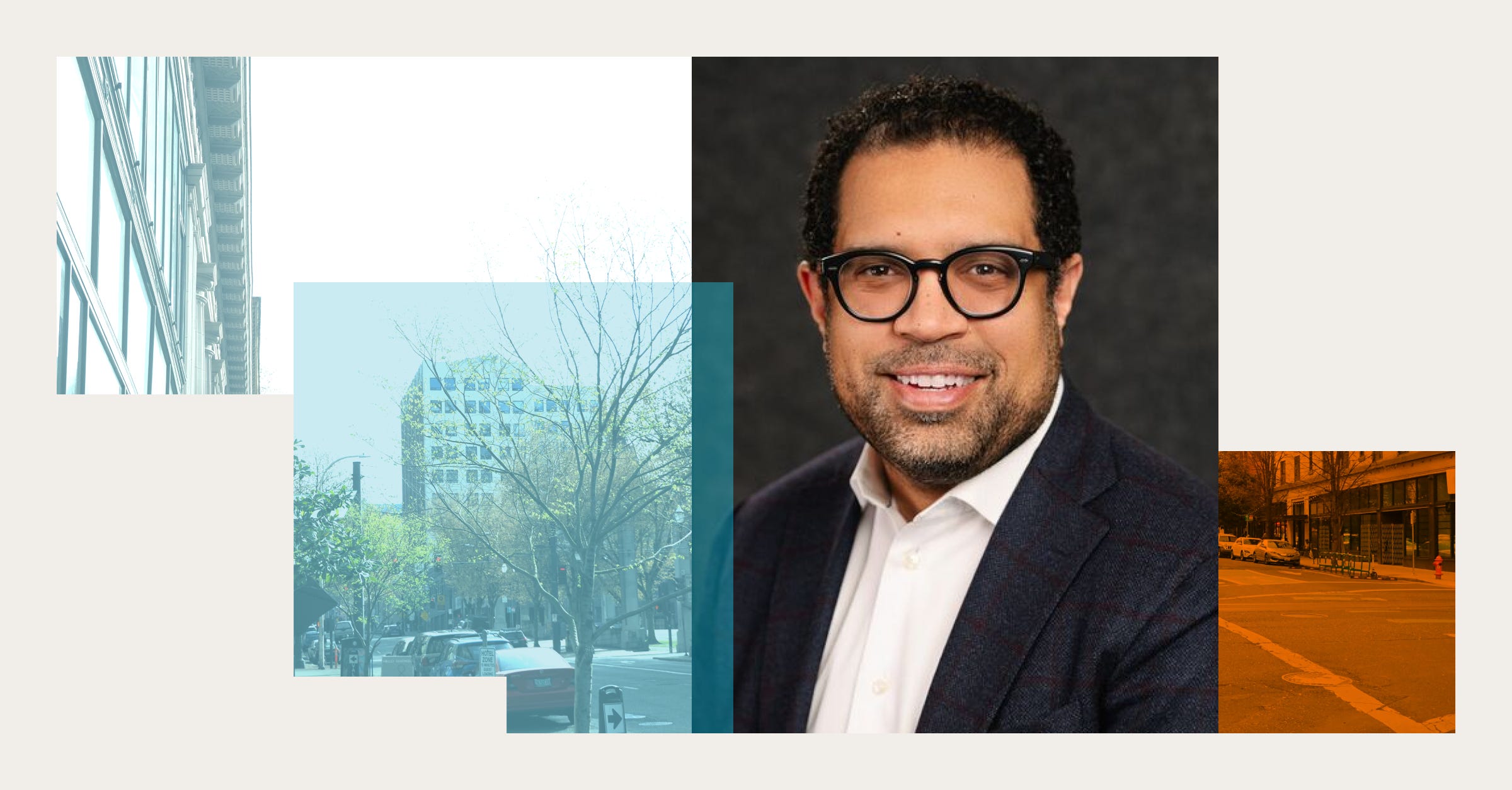
Nolan Lienhart operates fluently across design, policy, and planning strategy. From his start working for Earl Blumenauer, to supporting organizations like Albina Vision Trust and 1000 Friends of Oregon, to civic engagement on the Oregon Capitol Planning Commission, Nolan sees the built environment through institutional and political lenses that most designers do not. But Nolan is also a designer, leading complex, district-scale development projects at ZGF and bringing a keen attention to the fine grain of urban fabric.
Portland’s Central City Roundtable launched this year, and is co-chaired by Nolan and Mayor Wilson with a mandate to “reimagine and reignite downtown for new patterns of work, culture, and community life.” We caught Nolan at a moment when he’s focused on translating ideas into action. Our conversation touches on Portland’s ground floor retail, the role of urban planning, and the challenge of balancing ambitious projects with quick wins as we create Portland’s next chapter.
MATTHEW CLAUDEL: You’re working on projects around the country. Is the way Portland is talking about its future different than other cities?
NOLAN LIENHART: The legacy of planning excellence in Portland is a blessing and a curse. There are some people for whom that legacy is a North Star. It’s a sense of identity and a belief in our ability to do great things together. But it is also a bit of a crutch: the belief, whether it’s explicit or implicit in the way we show up to the table, that planning excellence is in our DNA. High expectations can both serve as an inspiration and they can also serve as a real point of despair when you’re not meeting them.
When I look at other places, particularly places that weren’t as successful in the eighties and nineties – the kind of places that would have been here touring Portland when we were doing light Rail and Streetcar and the Pearl District – I think they are a little bit more appreciative of the base hits.
My old boss used to have this phrase: you can either swing for the fences or you can bunt to get on base. His point was there’s value in getting the progress that you can get.
You might look at Portland’s light rail system at that time, especially compared to other cities, and call it a swing for the fences, not a bunt to get on base. In some of the other places where we work, there is a greater appreciation for the small moves toward progress and celebrating those, whereas here, our expectations are high.
“In Portland, decades of growth convinced many that we don’t need to aggressively recruit and attract, compared with places that have a culture of hustling for growth.”
The other one would be the notion of creating great places that are attractive to tourists and new residents and business. In a lot of other places it’s not a given: they want to have a strong growing, thriving economy, and that means they work at being a place where businesses want to locate. In Portland, decades of growth convinced many that we don’t need to aggressively recruit and attract, compared with places that have a culture of hustling for growth.
Our job growth has really been driven by companies that are not in the city of Portland for the last 25 years. My sense is that a more diversified economy (across firms and sectors) is more stable than one driven by a few large employers. If you have fundamentals that serve as a flywheel, not only do you have a pretty resilient tax base, but the economic diversity and engine is much more resilient than ours here.
CLAUDEL: I’m curious about this characterization of bunting versus swinging for the fences. Firstly, do you think those two things are mutually exclusive? Or do you think a good economic development strategy has both going simultaneously?
LIENHART: I’m not a baseball person, but I know that good baseball teams win the World Series with both. You have to appreciate the contribution that each of them make.
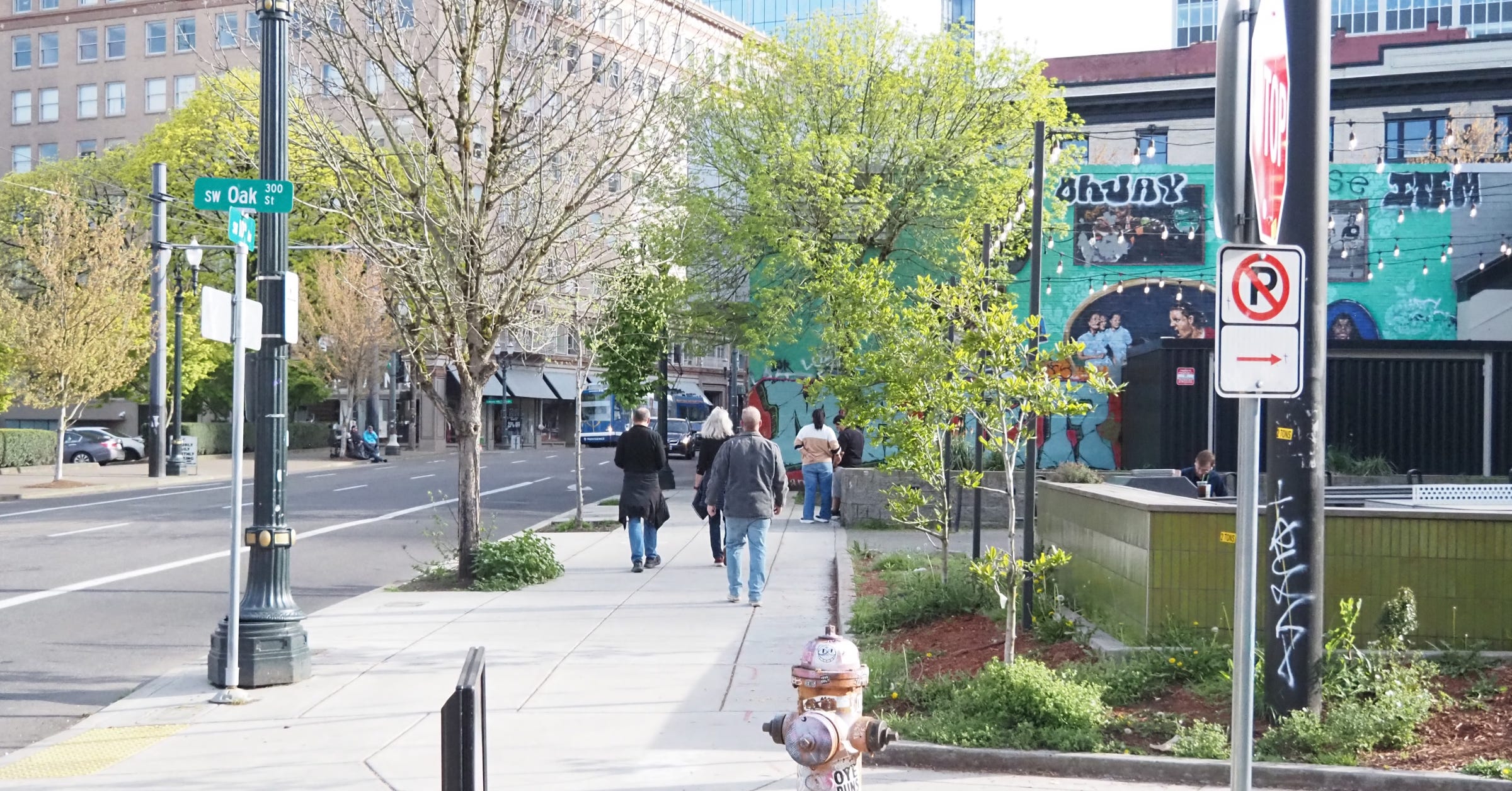
I would reject a debate between big things and small things. We should focus on catalytic, transformative, impactful things. And sometimes those are going to be a series of small moves and sometimes those are going to be a big move. Many of the things that put Portland on the map in the seventies, eighties, and nineties were big moves. We’ve also done a great job attracting residents and visitors with a strong cultural identity that is made up of lots of small things – coffee shops, brew pubs, restaurants, bands...
CLAUDEL: When you talk about big things, do you mean in terms of development projects, or do you mean policy, or infrastructure?
LIENHART: All the above. Probably less on the policy side. I think some of the big moves we made on policy were probably more detrimental, including big tax changes that do not serve us well to this day. In terms of infrastructure, in terms of district planning and placemaking, a lot of those things we did are big moves.
I would also say that big moves are not always more complicated. When you talk about the policy, it’s about impact rather than scale: small changes can have a big impact when it comes to policy, good or bad.
CLAUDEL: Can you give an example?
LIENHART: Yes. On the face of it, proponents of inclusionary housing have a tendency to look at the impact in terms of how many affordable housing units the policy is producing.
I don’t think that the average proponent took seriously the idea that if you get the formula wrong, you could actually affect all of the market rate multifamily housing coming to a halt or being cut in half. 10% is the target for affordable units, and that feels small, right? But getting the formula wrong means that nobody builds any housing. Last year we had permit applications for 600 units. That’s a disaster. I’m not trying to simplify that particular policy question, but what I’ll say is unlike dollars and capital investment, where they tend to scale in parallel, getting a little policy wrong can actually have a really big economic impact, and a big impact to social and civic outcomes.
CLAUDEL: Is it fair to say that the ground floor retail requirement in zoning is another example?
LIENHART: Not in my opinion. I know some developers who really feel like if you’re building a five story building and you’re required to have the ground floor as commercial or active use, it’s a problem. They should call me and I’ll tell them how to address that in a more creative way.
CLAUDEL: They should!
LIENHART: I don’t mean to be arrogant, but I think if you look at the great walkable cities, the ground floor is always a fluctuating use.
It’s the shoemaker and then it’s the boutique and the cafe and then it’s somebody’s apartment, and then it goes back to being a cafe. Maybe we don’t have that level of construction, design, or use flexibility these days. But it is unlikely that there are a lot of buildings that would be going forward right now if not for the ground floor active use requirement.
The notion that we can’t do it is just as problematic as the notion that being forced to do it is a disaster. I would call for nuance and embrace the gray zone.
“…if you look at the great walkable cities, the ground floor is always a fluctuating use.”
CLAUDEL: This idea is appealing. Let’s not be complaining about ground floor retail as a requirement, but instead think of it as a creative opportunity. What do we do with these ground floor spaces that could be retail one day and could be something else the next? On that note: you characterized a ground floor space as being quicker to change from one use to another, compared to upper floor spaces. Say more about that.
LIENHART: This is where I’ll make the distinction that you’re talking to a planner and not an architect. [A planner says] Oh, yeah, no problem. That’s simple.
There are some who would say no, a cafe needs a pretty specific set of design requirements. And these days, it probably does. There are probably a series of codes, and you would not want to make those investments if you weren’t going to do a restaurant or a cafe there. And there are certainly live-work units where nobody would ever put a store. Have we lost the ability to create big, huge, flexible spaces?
CLAUDEL: Creating a space that is amenable to many different uses – maybe slightly less optimized for any one of those uses, but which could be any of them – to me, that’s a less risky space to be owning and operating. I’d rather have that space than one that is perfectly designed and very pigeonholed. But it’s a planning concern too. This gets into zoning code and what we’re constraining or allowing in various districts.
LIENHART: There is a funny thing about the Pearl District. I’ve talked to people who are in real estate and have both developed and financed buildings. Some of them think the Pearl has too much retail and some think it has too little.
The Pearl is a great example of a place where there’s no main street. There are some people that love retail sprinkled all over the place. But from an efficiency of retail perspective and a pedestrian energy perspective, it might have been good to have one or two streets that people just know are the shopping streets. There are benefits from having one store after the next: you’re walking to get coffee and you pass Fjallraven and dip in there. I think we probably could have done that better. It is funny though that in the subsequent districts after Pearl, you still have the spread of retail everywhere, in the South Waterfront, and then Slabtown probably 10 years later.
I’m a big believer that if you have lots of people the ground floor will sort itself out – so long as you don’t preclude it through design.
By world standards, Portland is pretty low-density, and I think we’ve got enough room to adapt over the course of decades if we get it a little bit wrong. I’m very much not of the opinion that the planner has to be making sure we have enough of any given kind of space.
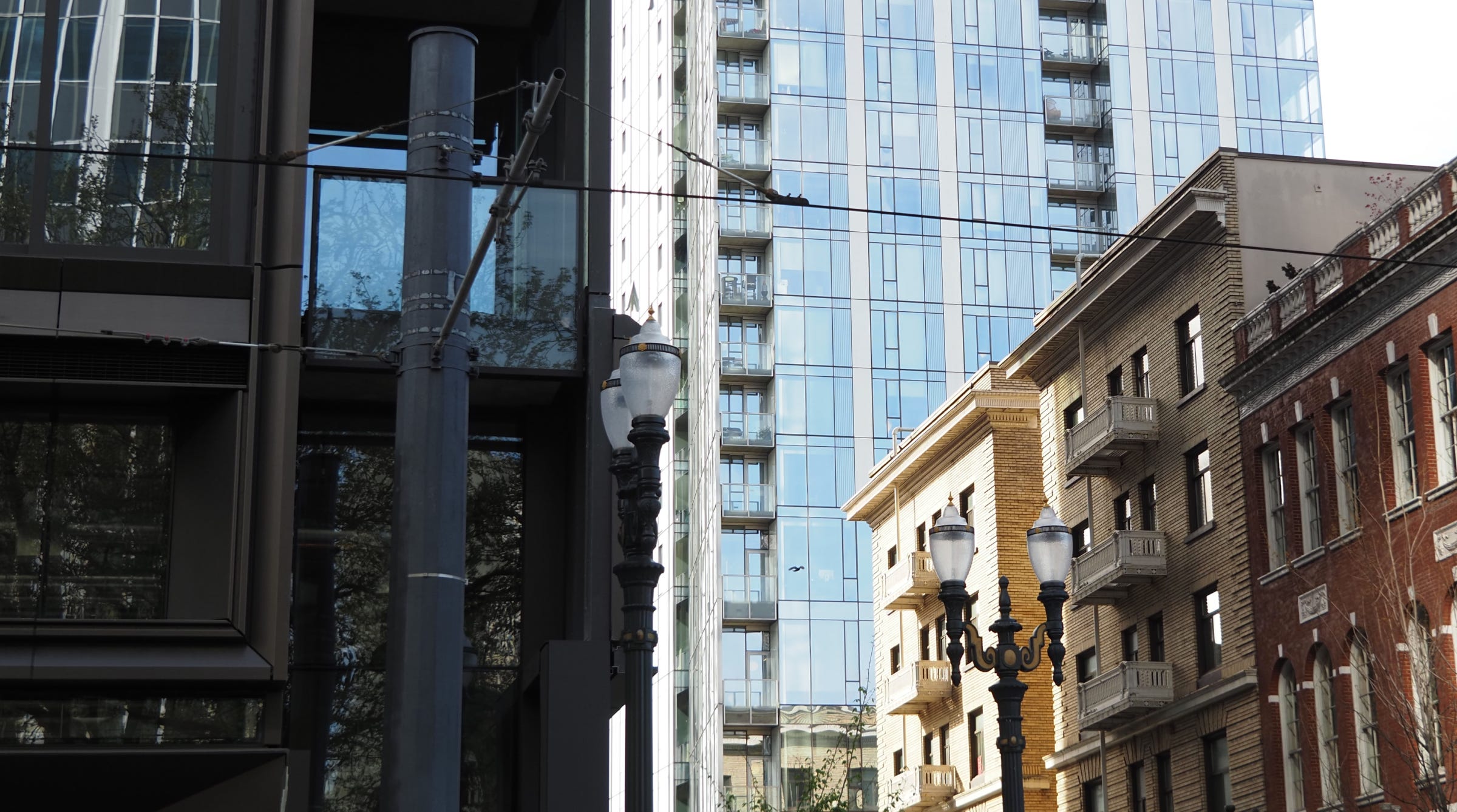
The planner’s responsibility is to make sure that we don’t have dead zones, blank walls that run 200 feet. Spaces that bring down the character and experience of being in an urban place or the perception of safety. It is much more about the experiential aspects of being in the city than the functional land use concern.
CLAUDEL: I agree that a planner shouldn’t be over-specifying in advance, and that a place should adapt over decades. If that’s true – shouldn’t the planner’s responsibility also be to enable the capacity to learn over those two decades?
LIENHART: Yes, in theory. We can all look back at a phase 10, 20, 30 years ago and recognize that it was a fad – every place has to have X. When we look back we realize it wasn’t necessary. You always have to be careful that you don’t decide something is so important right now, but find that it is totally useless or even counterproductive two decades from now.
If for some reason we planned a district and decided to focus all the retail on one street and then 10 years, 15 years from now, it became clear there is not enough retail in the rest of the district – we’re not developing so fast that we can’t correct that. The next developer is going to pick that up and realize there’s a real opportunity on the next block.
There was a debate about density on Twitter in the last two days. Somebody was saying that the right density is higher and another person was saying the right density is lower. And somebody else said maybe what we should do is have as few constraints as possible.
I said we shouldn’t impose a minimum density – and that’s a little controversial. Of course there’s a public interest argument that we probably shouldn’t put a one story building across from a major transit hub. But I do think if you have to fault, fault in favor of flexibility rather than faulting in favor of thinking you know what the prescription is.
CLAUDEL: I want to offer a third perspective, which is to say we can have rules based on expert-derived hypotheses about what the right solution is, but embed in those rules the capacity to learn based on what we’re eventually seeing. That’s not exactly flexibility. It’s adaptability. It’s a learning framework. Do you think that we have the capacity to do that today, at the institutional level?
LIENHART: Yes. My question would be, is it the policy and the framework of policies, guidelines, and regulations that’s adapting? Or is it the market that’s adapting?
I think a developer would tell you: if you give me a lot of flexibility, I will adapt. I will watch what works and what doesn’t on the street. The next project will respond to the last project.
On the other hand, if you say we want a flexible and adaptable policy framework then the question is: are you updating the policy as you see what works and doesn’t work? Or are you having some built-in discretionary function? Actually design guidelines and design review is a really good example of exactly what you’re describing. They specify a goal: we want active and vital streets, we want robust vegetation in the right of way, we want all transit modes to be accommodated. Developers, show us how you’re going to do that.
The way that today’s design commission interprets proposals may be completely different from the interpretations of the design commission 12 or 20 years ago. That’s the adaptation function. There’s a little bit of taste, a little bit of a reaction to the one we didn’t like or the one we loved that just got built.
A good example of this is above-ground structured parking. People used to think it was totally cool to just screen it with some architectural treatment or sculptural screening. Recently some commissioners have indicated a preference for programmed space at the facade with parking behind, so that when you look up, it looks like an active building, not a dark wall or open parking.
The rule didn’t change. Their interpretation of what created an active and vital public realm changed. You might say that’s the way we do adaptability today.
“The rule didn’t change. Their interpretation of what created an active and vital public realm changed. You might say that’s the way we do adaptability today.”
CLAUDEL: So you characterized generations of urban change. Now you see trends and workplace patterns and retail patterns – things like data centers suddenly being the most interesting target for development – these things are changing fast.
To me that says we don’t have the luxury of adapting our built environment on the generational scale, project to project. We need to be thinking about evolution within a project itself, having an in-built adaptation capacity.
Do you think that’s true? We can be concrete about it too. Portland, like many cities, has an extraordinary amount of commercial space. We have a lot of vacant retail space. Should it all be torn down? Can we find a way to do something with it?
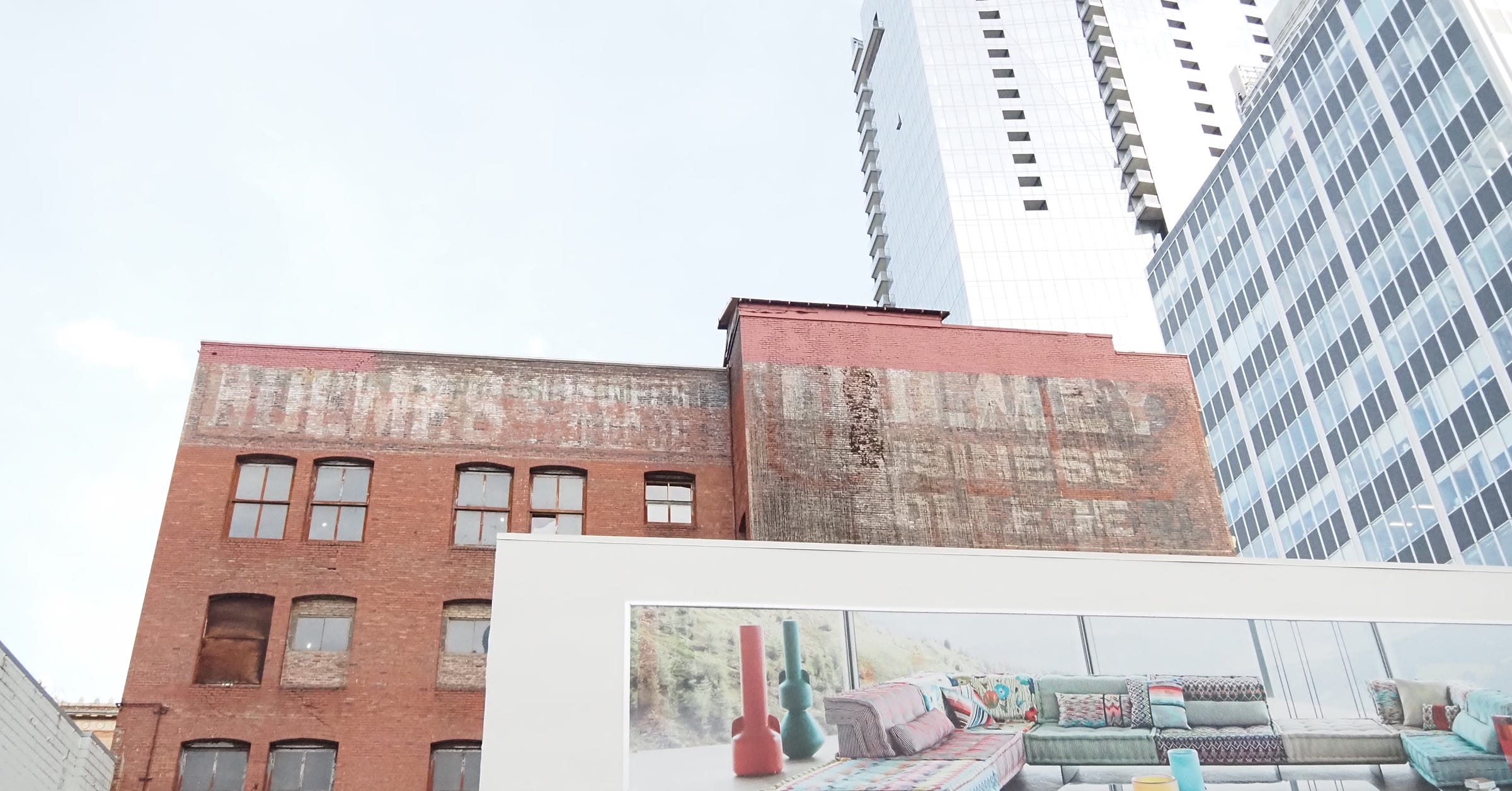
LIENHART: My friend who made the point about the flexibility of ground floor spaces – I think he would say that buildings have been getting adapted for a long time. The buildings that we would most likely want to tear down – the ones that feel the least flexible, the historic building that’s not up to fire code, or has unreinforced masonry, or needs extremely expensive seismic retrofit – in many ways, those are the ones we could use most creatively if we don’t burden them with a whole series of requirements that they become a perfect 21st century building.
CLAUDEL: Are these the kinds of questions you’re contemplating in the Mayor’s Round Table? Where do you see that going?
LIENHART: So the Round Table is a relay team member for the Governor’s Downtown Task Force. The Task Force essentially established a value proposition for the central city: who cares about the central city, why is it important, and what are the things that we want to get out of a thriving central city?
That broke down three broad categories. One: it’s a place to gather arts, culture, and civic activities. The second was that it’s a place of innovation: work, education, innovation between people. The benefits of proximity. Third, it’s a great place to live because it has a concentration of services and amenities within walking distance. There has been huge investment in transportation that helps you get everywhere else you want to be more easily than any other place.
There was a handoff to the Mayor, and now it’s the mayor’s Round Table. He has framed it as an implementation table. Great work, Task Force – we agree on the value proposition, we agree that these are important strategies – now: what do we need to do to implement these strategies?
That will happen in concert with the other plans that the City has that address the central city. We have transportation plans, we have Advance Portland. There are a series of other plans, and in some cases it’s going to be about getting all the right resources to the table to do the things that we need to do.
In other cases it may be about political will to create policy change and make some of these things happen. The group that’s been assembled is smaller than the Governor’s task force. It is focused on people who are leading organizations that are deeply invested in the success of the central city.
We have an opportunity to lend our voices to all those initiatives. There may also be a role of coming up with the big idea, but I think we’re not going to be sitting at that table asking so what should we do? as much as we are going to be saying, how do we do it, or how do we get there? What does this catalytic idea need to be successful?
Portland, as a city, is not short on ideas. We are a city that needs alignment, needs investment. Pulling us all together on a regular basis is intended to help strengthen the alignment and accelerate investment.
Now on the big questions of how to adapt for the future – some of them may be topics that this table can grapple with. But I would also say the Mayor’s focus on key performance indicators is a reminder that he really wants the table to be action oriented. And accordingly there will probably be a little bit less focus on the things that take a long time to figure it out or even to identify the scope of.
CLAUDEL: Coming full circle: we need the quick wins. We need to bunt and get to first base.
LIENHART: We will be leaning into several different issues – but what “leaning into” looks like is going to be different on different topics. Somewhere it might be writing a letter. Somewhere it might be helping to go recruit a business or solicit the legislature for funding.
The intent is that we are dynamic and able to be responsive to anything that moves the needle on those key performance indicators.
“The intent is that we are dynamic and able to be responsive to anything that moves the needle on those key performance indicators.”
CLAUDEL: Thank you, Nolan. I’m excited to see what comes of the Round Table.
LIENHART: I look forward to hearing the outcome of all your conversations. These are good questions.